Archives - Page 2
-
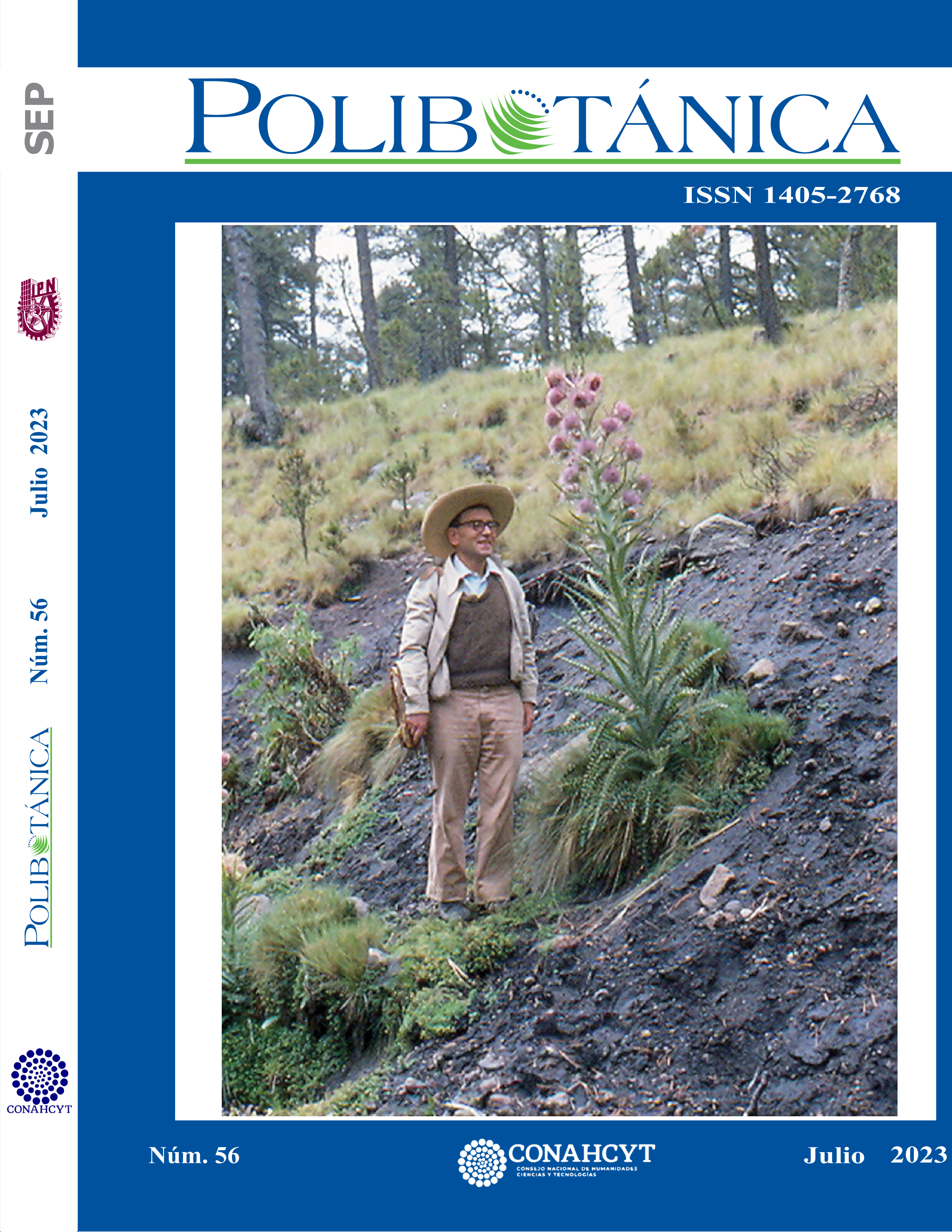
POLIBOTANICA 56
No. 56 (28)Jerzy Rzedowski Rotter (1926-2023). Considered one of the most influential botanists in Mexico. He ventured into several botanical disciplines such as taxonomy, floristics, phytogeography, and ecology. He formed several institutional herbaria, and collected samples of Mexican flora, achieving a collection that exceeded 50,000 numbers. He worked on the Phanerogamic Flora of the Valley of Mexico and the Flora of the Bajio and Adjacent Regions; he also wrote the book The Vegetation of Mexico, a classic work of Mexican botanical literature. Throughout his career, he was also dedicated to teaching and training botanists. His work includes the publication of 7 books, 47 book chapters, 128 articles in scientific journals, and 31 fascicles of floras. He discovered about 190 new species of Mexican plants and more than 85 species of Mexican fungi, plants, and animals were named in his honor.
-
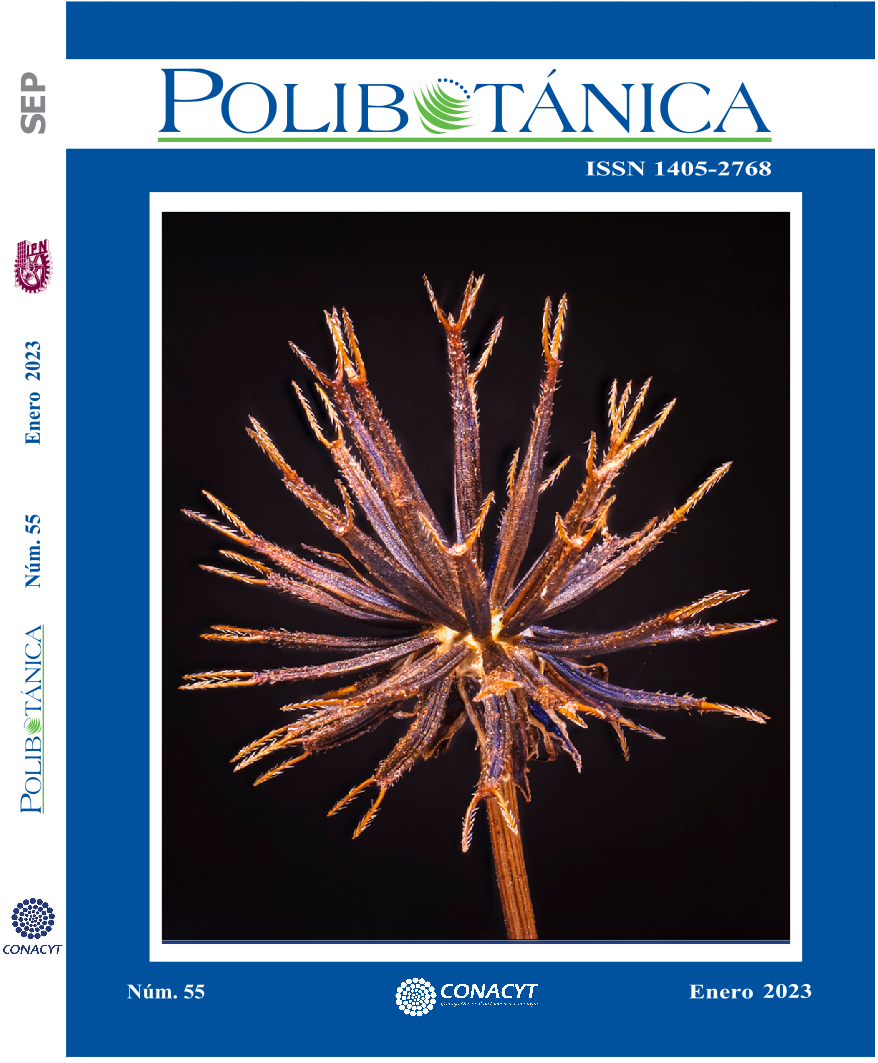
POLIBOTANICA 55
No. 55 (28)Bidens pilosa L. Asteraceae. “Acahual”. Achenes 5 to 18 mm long, inner ones linear and longer, outer ones more or less dorso-ventrally compressed and shorter, blackish to brownish, pappus with 3-2 yellow awns, 1 to 3 mm long. Plant with multiple therapeutic properties, considered in folk medicine as diuretic and febrifuge, stomachic and anti-ulcerous, to cure colds with fever, pharyngitis, and tonsillitis.
-
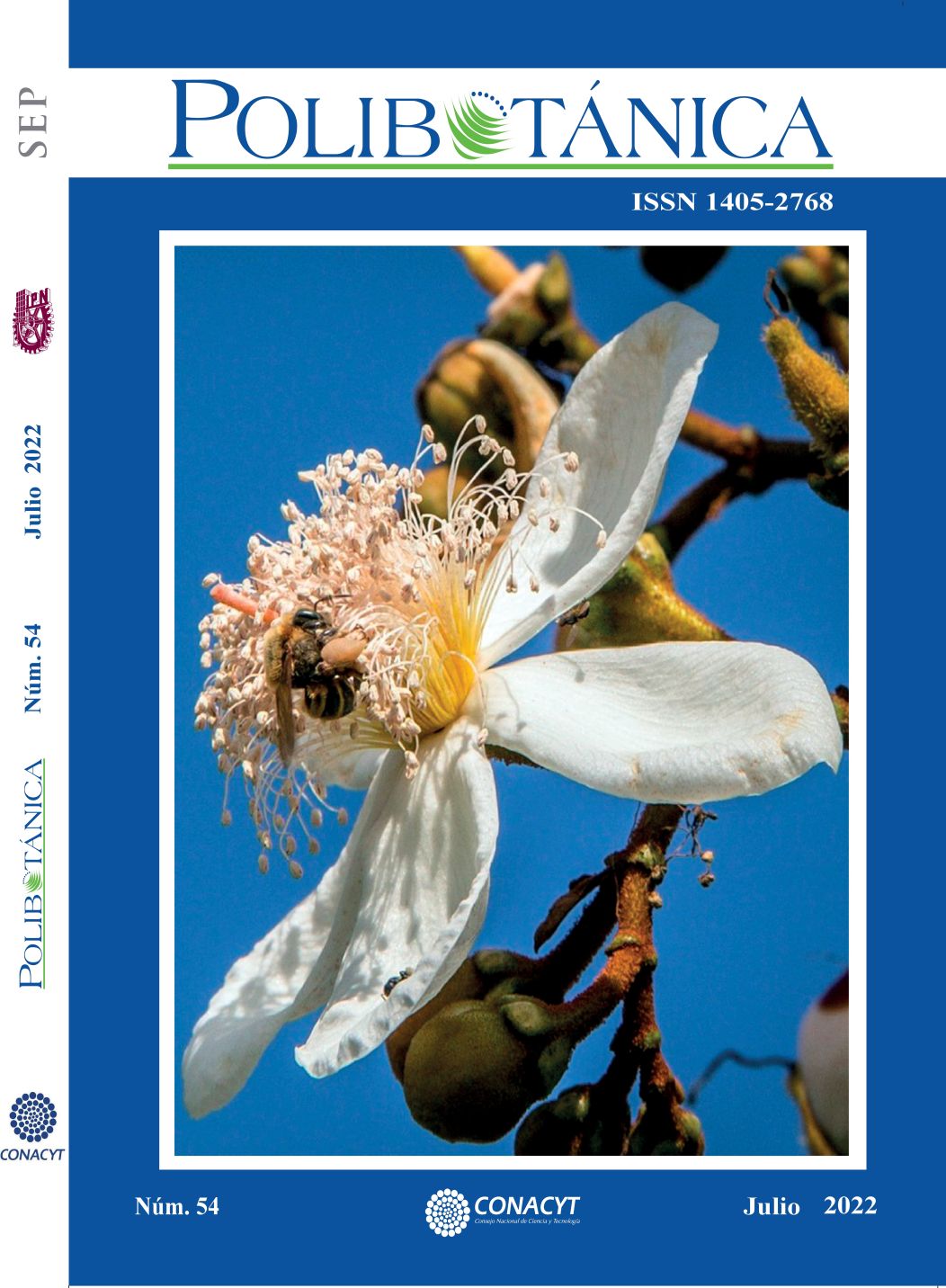
POLIBOTANICA 54
No. 54 (27)Flower of Bixa orellana L. (Bixaceae), "achiote" pollinated by Melipona beecheii Bennett (Apidae), "jicota mansa". The main pollinators for the flowers of numerous species of trees, plants and lianas in tropical and subtropical forest and jungle areas are stingless bees, but they are also important in the crops introduced in these regions, so much so that some countries already have established technology for the breeding and use of wild bees in crop pollination.
-

POLIBOTANICA 53
No. 53 (27)Podopterus mexicanus Humb.& Bonpl. Polygonaceae.”Rompe capa”. Trees or shrubs 1.5-6.0 m tall, branches with a terminal spine, brachyblasts, fasciculate leaves, white to greenish flowers in fascicles, and fruit covered by the external perianth that forms thin wings and longly decurrent towards the pedicel. It grows in tropical deciduous forests and thorny forests, on black, rocky soil derived from igneous rocks. At elevations of 550-760 m. Blossoms from April to May and bears fruit from June to September. It is distributed from Mexico to Central America. In Mexico it is found in the states of Colima, Guerrero, Oaxaca, Puebla, Tamaulipas, Veracruzand Yucatán. It is used as a melliferous plant and for firewood.
-
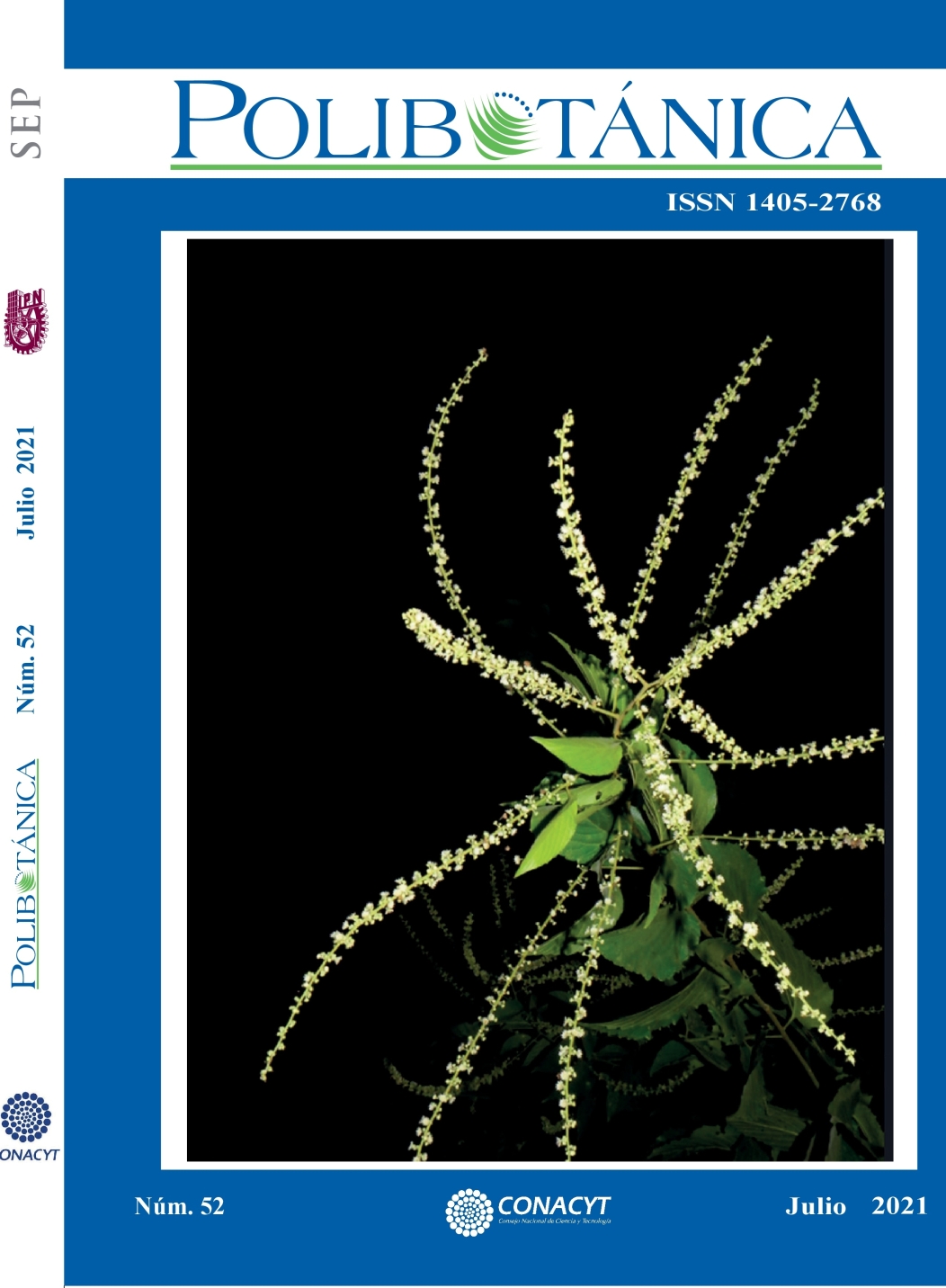
POLIBOTANICA 52
No. 52 (26)Gouania lupuloides (L.) Urban. Rhamnaceae. “Bejuco del fuego o jaboncillo”. Climbing plant up to 10 m long. Leaves alternate, the blade ovate or elliptical, 4-10 cm long, 2-6 cm wide. Inflorescences in slender racemes, 5-20 cm long; small flowers with white petals. Fruit a schizocarp. It is distributed in Mexico, Central America, and the Antilles in tropical forests from sea level to 900 m. Plant rich in saponins and is used to make toothpaste.