The commercialization of tropical deciduous forest plants and their cultural importance in central Mexico
DOI:
https://doi.org/10.18387/polibotanica.60.27Keywords:
Tropical deciduous forest, extraction, commercialization, cultural value, MorelosAbstract
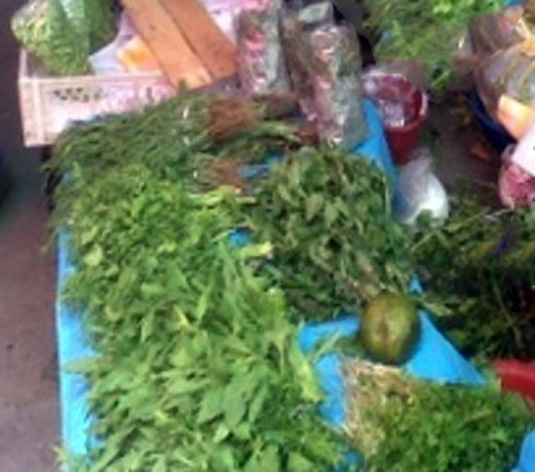
The process of extracting useful plants from tropical deciduous forests (TDF) in three neighboring municipalities in central Mexico for commercialization is analyzed, as well as the cultural importance of these species in municipalities with cultural differences. Through ethnobotanical tours in markets and, permanent and mobile stalls, the commercialized species from the TDF were identified. Semi-structured interviews were conducted with vendors to learn about collection methods and times, uses, parts used, and frequency of sale. With this information, a cultural value index was created and a list of useful plants was generated. To test whether the composition of commercialized plants varies between communities, two multidimensional scaling analyses were performed. The first used a matrix of paired similarities between communities with the Jaccard index, and the second used the Morisita-Horn similarity index. Fifty-six commercial plant species from the tropical deciduous forest were found, belonging to 31 families and 49 genus. The most diverse families were FABACEAE with 13 species, and ASTERACEAE with 9. Similarities based on the Jaccard index were between 22.2% and 30.4% lower than those calculated with the Morisita-Horn index, indicating that the plant diversity offered between communities differs by species identity but is homogenized by their cultural value. It is observed that, despite their differences, the proximity of the municipalities maintains traditional rural lifestyles, primarily in the municipalities of Xoxocotla and Puente de Ixtla. Jojutla, despite being an urban municipality, harmonizes native use patterns such as the use of medicinal and edible plants with modern elements to meet some needs.
References
Alexiades, M. J. (1996). Collecting ethnobotanical data: an introduction to basic concepts and techniques. Advances in economic botany. Estados Unidos: New York Botanical Garden Press.
Andrade, G. I., & Terborgh, J. (2005). Science and society at the World Parks Congress. Conservation Biology, 4-6.
Arnold, J. M., & Pérez, M. R. (2001). Can non-timber forest products match tropical forest conservation and development objectives? Ecological Economics, 437-447.
Barrera-Bassols, N., Zinck, J. A., & Van , R. E. (2006). Symbolism, knowledge and management of soil and land resources in indigenous communities: Ethnopedology at global, regional and local scales. Catena, 118–137.
Bermudez, A., Oliveira-Miranda, M. A., & Velázquez, D. (2005). La investigación etnobotánica sobre plantas medicinales: Una revisión de sus objetivos y enfoques actuales. Interciencia, 453-459.
Bonilla Barbosa, J. R., & Villaseñor Ríos , J. L. (2003). Catálogo de la flora del estado de Morelos. Cuernavaca: Centro de Investigaciones Biológicas, Universidad Autónoma del Estado de Morelos.
Brandon, K., Redford, K. H., & Sanderson, S. E. (1998). En Parks in Peril: People, Politics, and Protected Areas. Washington, DC, Estados Unidos: sland Press, en colaboración con The Nature Conservancy.
Bye, T. P. (1993). The role of humans in the diversification of plants in Mexico. Reyno Unido: Oxford University Press.
Camacho, R. L. (2008). Produtos florestais não madeiráveis: importância e impacto do seu aproveitamento. Colombia Forestal, 215-231.
Camargo Ricalde, S. L., Martínez Bernal, A., García García, V., & Barrios del Rosal, S. (2001). Useful species of the genus Mimosa (Fabaceae-Mimosoideae) in Mexico. Boletín de la Sociedad Botánica de México, 33-44.
Caniago, I., & Siebert , S. F. (1998). Medicinal plant ecology, knowledge and conservation in Kalimantan, Indonesia. Economic Botany, 229-250.
Ceballos, G., & García, A. (1995). Conserving neotropical biodiversity: the role of dry forest in western Mexico. . Conservation Biology, 1349-1353.
CITES. (2011). Convención sobre el Comercio Internacional de Especies Amenazadas de Fauna y Flora Silvestres (CITES). Obtenido de http://www.cites.org/esp/app/ap-pendices.shtml
Corbetta, P. (2003). Metodología y técnicas de investigación social. Madrid: McGraw-Hill.
Eguiarte , L. E. (2001). Hacia una etnobotánica mexicana y moderna. Botanical Sciences, 12-15.
Gao, C. , H., Chen, , C., Yu, , G., Dusa, , A., Cao, , B., Cai, , P., & Akyol, T. , Y. (2024).
GgVennDiagram: A “ggplot2” implement of Venn diagram. iMeta.
Gómez Pompa , A. (1993). Las raíces de la etnobotánica mexicana. Acta Biológica Panamensis, 87-100.
Gomez-Beloz, A. (2002). Plant use knowledge of the Winikina Warao: The case for questionnaires in Ethnobotany. Economic Botany , 231-24
Gómez-Pompa, A., & Burley, F. W. (1991). Gómez-Pompa, A. En A. Gómez-Pompa, Rainforest regeneration and management (págs. 13-18). Paris: UNESCO.
Johns, R. J. (1992). The influence of deforestation and selective logging operations on plant diversity in Papua New Guinea. En Tropical deforestation and species extinction (págs. 143-147). Londres: Chapman and Hall.
Lara Reimers, E. A., Fernández Cusimamani, E., Lara Rodríguez, E. A., Zepeda del Valle, J. M., Polesny, Z., & Pawera, L. (2018). An ethnobotanical study of medicinal plants used in Zacatecas state, Mexico. Acta Societatis Botanicorum Poloniae, 1-15.
López-Gutierrez, B., Pérez-Escandon, B., & Villavicencio-Nieto, M. (2014). Aprovechamiento sostenible y conservación de plantas medicinales en Cantarranas, Huehuetla, Hidalgo, México, como un medio para mejorar la calidad de vida en la comunidad. Botanical Sciences, 389-404.
Luna-José, A. d., & Rendón-Aguilar, B. (2008). Recursos vegetales útiles en diez comunidades de la Sierra Madre del Sur, Oaxaca, México. Polibotánica, 193-242.
Martin, G. J. (2001). Etnobotánica : manual de métodos. Montevideo: NORDAN-COMUNIDAD.
Martínez-López, G., Palacios-Rangel, M. I., Guízar Nolazco, E., & Villanueva Morales, A. (2021). Usos locales y tradición: estudio etnobotánico de plantas útiles en San Pablo Cuatro Venados (Valles Centrales, Oaxaca). Polibotánica, 193-212.
Matta, J. R., & Schweitzer Meins, L. (2012). Un nuevo lugar para situar los bosques dentro del sector del desarrollo. Unasylva: revista internacional de silvicultura e industrias forestales,, 3-8.
Moerman, D. E., Pemberton, R. W., Kiefer,, D., & Berlin, B. (1999). A comparative analysis of five medicinal floras. Journal of Ethnobiology, 49-70.
Monroy-Ortiz, C., & Monroy, R. (2004). Análisis preliminar de la dominancia cultural de las plantas útiles en el estado de Morelos. Botanical Sciences, 77-95.
Moreno, A., & Sandoval, K. (213). Diversidad genómica en México: Pasado indígena y mestizaje. . Cuicuilco, 249-275.
Oksanen, J.; Blanchet, F. G.; Friendly, M.; Kindt, R.; Legendre, P.; McGlinn, D.; Minchin, P. R.; O'Hara, R. B.; Simpson, G. L.; Solymos, P.; Stevens, M. H. H.; Szoecs, E.; Wagner, H. (2022). vegan: Community Ecology Package (versión 2.6-4)[Paquete R].
Pérez-Negrón, E., & Casas , A. (2007). Use, extraction rates and spatial availability of plant resources in the Tehuacán-Cuicatlán Valley, Mexico: The case of Santiago Quiotepec, Oaxaca. Journal of Arid Environments, 356-379.
Prance, G. T. (1991). What is ethnobotany today? Journal of Ethnopharmacology, 209-216.
Reyes Zepeda, T. (2022). Gestión administrativa de los municipios del Estado de Morelos fundamentada en el control interno. Cuernavaca: Gobierno del estado de Morelos.
Rzedowski, J. (1991). El endemismo de la flora fanerogámica mexicana. Acta Botánica Mexicana, 47–64.
Rzedowski, J., & Huerta, M. (1978). Vegetación de México. México, D.F.: Limusa.
Sanabria Diago, O. L., & Argueta, A. (2020). Cosmovisiones y naturalezas en tres culturas indígenas de Colombia. Etnobiología, 5-20.
SEMARNAT, S. d. (diciembre de 30 de 2010). Norma Oficial Mexicana NOM-059-SEMARNAT-2010. Obtenido de https://www.dof.gob.mx/nota_detalle.php?codigo=5173091&fecha=30/12/2010
Singh, S. (1998). Chronic Disturbance, a Principal Cause of Environmental Degradation in Developing Countries. Environmental Conservation, 1-15.
Sotelo-Caro, O., Chichia-González, J., Sorani, V., & Flores-Palacios , A. (2015). Changes in the deforestation dynamics of a river sub-basin of Mexico: non-recovery of primary habitats following cessation of deforestation. Revista de geografía Norte Grande, 205-219 .
Sotelo-Caro, O., Valencia-Diaz, S., Infante-Mata, D. M., Castillo-Campos, G., & Flores-Palacios, A. (2023). The effect of chronic disturbance on the woody plant diversity in a tropical dry forest of Central Mexico. Flora, 1-9.
Tapia-Tapia, E., & Reyes-Chilpa, R. (2008). Mexican non-wood forest products: economic aspects for sustainable development. Madera bosques , 95-112.
Trejo, I., & Dirzo, R. (2002). Floristic Diversity of Mexican seasonally dry tropical forest. Biodiversity and Conservation, 2063-2084.
Villaseñor, J. L. (2003). Diversidad y distribución de las Magnoliophyta de México. Intercien. Interciencias , 160-167.
Wickham, H. (2016). Data analysis. En ggplot2: Elegant graphics for data analysis (págs. 189-201). Cham: Springer International Publishing.
Wong, J., Baker, N., & Thornber, K. (2001). Evaluación de los recursos de productos forestales no madereros. Experiencia y principios biométricos. Estados Unidos: FAO.
Zambrano-Intriago, L. F., Buenaño-Allauca, M. P., Mancera-Rodríguez, N. J., & Jiménez-Romero, E. (2015). Ethnobotanical study of medicinal plants used by rural inhabitants of the parish San Carlos Quevedo in Ecuador. Universidad y Salud, 97-111.
Downloads
Published
License
Copyright (c) 2026 POLIBOTANICA

This work is licensed under a Creative Commons Attribution-NonCommercial-ShareAlike 4.0 International License.

Polibotánica by Departamento de Botánica de la Escuela Nacional de Ciencias Biológicas del Instituto Politécnico Nacional se distribuye bajo una Licencia Creative Commons Atribución-NoComercial-CompartirIgual 4.0 Internacional.