Vascular epiphyte richness in The Peñón reserve, municipality of Valle de Bravo, Estado de México, Mexico
DOI:
https://doi.org/10.18387/polibotanica.60.2Keywords:
ferns, floristic inventory, holoepiphytes, Oak forest, orchidsAbstract
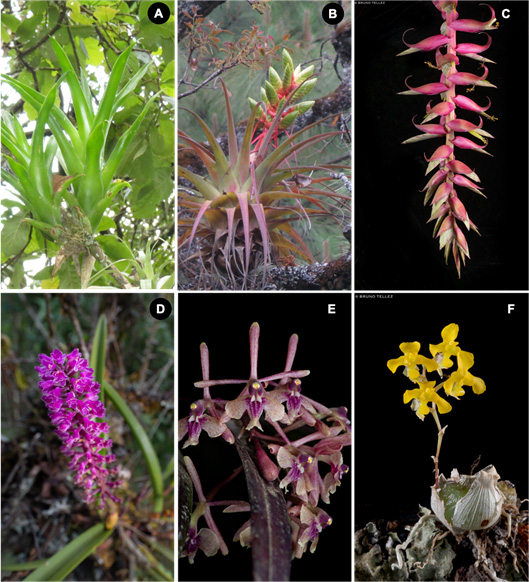
The inventory of the richness and distribution of vascular epiphytes is still incomplete for some states of México, including Estado de México. With the aim of contributing to the knowledge of this botanical component for the entity, a list and a photographic catalog of the vascular epiphytes of El Peñón private reserve were generated, the area is located in the municipality of Valle de Bravo, which belongs to the federal protected natural area Cuencas de los Ríos Valle de Bravo, Malacatepec, Tilostoc y Temascaltepec. Based on explorations and recollection of specimens in the area over the course of a year, we recorded the presence of 30 species, distributed in 24 genera and 13 families; 16 taxa are endemic to Mexico. Orchidaceae and Polypodiaceae were the families with greater richness, with 14 and six species respectively. The genus Pleopeltis was the best represented with three species, followed by Oncidium, Polypodium, Prosthechea, Rhynchostele, Tillandsia, and Stelis, each one with two taxa. The months with the highest number of species in flowering stage were April, September and November. Laelia autumnalis, Oncidium tigrinum, and Rhynchostele cervantesii are cataloged in NOM-059-SEMARNAT-2010. Knowledge of vascular epiphytes registered for El Peñón increased 57.6 %. Flowering plants of Rhynchostele cervantesii, R. aptera, and Laelia autumnalis are used by residents of the region as ornamentals. Illegal substraction of these plants represents a serious threat in the near future to wild populations. There are few entities of the country that have lists of epiphytic plants made systematically, and the results of this work demonstrate that, even in areas as small as the study area species that are not so easily observable, such as those that live in the treetops, continue to be recorded.
References
Aguirre-León, E. (1986). Epífitas. In A. Lot & F. Chiang (Eds.), Manual de herbario: Administración y manejo de colecciones, técnicas de recolecciones y preparación de ejemplares botánicos (pp. 113–119). Consejo Nacional de la Flora de México, A. C. y el Instituto de Biología, Universidad Nacional Autónoma de México.
APG. (2016). An update of the Angiosperm Phylogeny Group classification for the orders and families of flowering plants: APG IV. Botanical Journal of the Linnean Society, 181(1), 1–20. https://academic.oup.com/botlinnean/article/181/1/1/2416499
Benzing, D. H. (2012). Air plants. Cornell University Press.
Castillo-Pérez, L. J., Martínez-Soto, D., Maldonado-Miranda, J. J., Alonso-Castro, A. J., & Carranza-Álvarez, C. (2019). The endemic orchids of Mexico: a review. In Biologia (Vol. 74, Issue 1). De Gruyter. https://doi.org/10.2478/s11756-018-0147-x
Ceja-Romero, J., Espejo-Serna, A., García-Cruz, J., López-Ferrari, A. R., Mendoza-Ruiz, A., & Pérez-García, B. (2012). Epífitas vasculares del bajío y de regiones adyacentes. Flora Del Bajío y de Regiones Adyacentes, XXVIII, 1–53.
Ceja-Romero, J., Mendoza-Ruiz, A., López-Ferrari, A. R., Espejo-Serna, A., Pérez-García, B., & García-Cruz, J. (2010). Las epífitas vasculares del estado de Hidalgo, México: Diversidad y distribución. Acta Botanica Mexicana, 93, 1–39. https://doi.org/10.21829/abm93.2010.274
CONAGUA. (2022). Sistema de información y visualización de estaciones automáticas. https://smn.conagua.gob.mx/es/climatologia/informacion-climatologica/informacion-estadistica-climatologica
CONANP. (2023). Áreas Naturales Protegidas decretadas. Comisión Nacional de Áreas Naturales Protegidas.
Emeterio-Lara, A., García-Franco, J. G., Hernández-Apolinar, M., Mora-Herrera, M. E., Toledo-Hernández, V. H., Valencia-Díaz, S., & Flores-Palacios, A. (2018). Endogamy costs and reproductive biology of Laelia autumnalis, an endemic orchid of Mexico. Plant Ecology, 219(12), 1423–1434. https://doi.org/10.1007/s11258-018-0891-6
Emeterio-Lara, A., Palma-Linares, V., Vázquez-García, L. M., & Mejía-Carranza, J. (2016). Usos y comercialización de orquídeas silvestres en la región sur del Estado de México. Polibotánica, 0(42). https://doi.org/10.18387/polibotanica.42.10
Espejo-Serna, A., López-Ferrari, A. R., Mendoza-Ruiz, A., García-Cruz, J., Ceja-Romero, J., & Pérez-García, B. (2021). Mexican vascular epiphytes: Richness and distribution. Phytotaxa, 503(1), 1–124. https://doi.org/10.11646/phytotaxa.503.1.1
Farrera Sarmiento, O., Jonapá Solís, J. M., Hernández Najarro, F., & Beutelspacher, C. R. (2012). Las epifitas vasculares del cerro Mozotal Motozintla Chiapas. Lacandonia, 6(6), 27–41.
Flores-Argüelles, A., Espejo-Serna, A., López-Ferrari, A. R., & Krömer, T. (2022). Diversity and Vertical Distribution of Epiphytic Angiosperms, in Natural and Disturbed Forest on the Northern Coast of Jalisco, Mexico. Frontiers in Forests and Global Change, 5. https://doi.org/10.3389/ffgc.2022.828851
Flores-Palacios, A., & Garcia-Franco, J. G. (2001). Sampling methods for vascular epiphytes: their effectiveness in recording species richness and frequency. Selbyana, 22(2), 181–191.
Francisco-Gutiérrez, A., Cházaro-Basáñez, M., & Carral-Domínguez, R. (2023). The first epiphytic species of Valeriana in the world: Valeriana rudychazaroi (Caprifoliaceae). PhytoKeys, 236, 145–156. https://doi.org/10.3897/PHYTOKEYS.236.110905
Gomez-Escamilla, I. N., Espejo-Serna, A., López-Ferrari, A. R., & Krömer, T. (2019). Distribución geográfica de angiospermas epífitas de la región terrestre prioritaria Cerros Negro-Yucaño, Oaxaca, México. Revista de Biología Tropical, 67(1), 118–131. https://doi.org/10.15517/rbt.v67i1.32726
Hernández López, L., Flores Argüelles, A., & Reynoso Dueñas, J. J. (2014). Riqueza de epífitas vasculares en tres sitios de Jalisco. Revista Mexicana de Ciencias Forestales, 5(24), 216–225. https://doi.org/https://doi.org/10.29298/rmcf.v5i24.330
Hoeber, V., & Zotz, G. (2022). Accidental epiphytes: Ecological insights and evolutionary implications. In Ecological Monographs (Vol. 92, Issue 4). John Wiley and Sons Inc. https://doi.org/10.1002/ecm.1527
Krömer, T., Espejo-Serna, A., López-Ferrari, A. R., Acebey, A. R., García-Cruz, J., & Mathieu, G. (2020). Las angiospermas epífitas del estado de Veracruz, México: diversidad y distribución. Revista Mexicana de Biodiversidad, 91. https://doi.org/10.22201/IB.20078706E.2020.91.3415
López-Pérez, Y., Tejero-Díez, J. D., Torres-Díez, A. N., & Luna-Vega, I. (2011). Flora del bosque mesófilo de montaña y vegetación adyacente en Avándaro, Valle de Bravo, Estado de México, México. Boletín de La Sociedad Botánica de México, 88, 35–53.
Martínez-Meléndez, N., Ramírez-Marcial, N., García-Franco, J. G., Cach-Pérez, M. J., & Martínez-Zurimendi, P. (2022). Importance of Quercus spp. for diversity and biomass of vascular epiphytes in a managed pine-oak forest in Southern Mexico. Forest Ecosystems, 9. https://doi.org/10.1016/j.fecs.2022.100034
Mena-Jiménez, F., Valencia-Díaz, S., Corona-López, A. M., & Flores-Palacios, A. (2024). A case of accidental epiphytes that supports the notion of the evolution of epiphytes from ancestors living in open environments. Flora: Morphology, Distribution, Functional Ecology of Plants, 317. https://doi.org/10.1016/j.flora.2024.152553
Mendoza-Ruiz, A., Ceja-Romero, J., & Pérez-García, B. (2016). Helechos y licofitos epífitos de Veracruz, México: riqueza y distribución. Acta Botanica Mexicana, 114, 87–136. https://doi.org/10.21829/abm114.2016.1104
Miguel-Vázquez, M. I., Espejo-Serna, M. A., Ceja-Romero, J., & Cerros-Tlatilpa, R. (2020). Las angiospermas epífitas de Puebla, México: riqueza y distribución. Botanical Sciences, 98(3), 585–596. https://doi.org/10.17129/BOTSCI.2540
Mora-Olivo, A., Estrada-Castillón, E., Pando-Moreno, M., De la Rosa-Manzano, E., & Jurado, E. (2018). Distribución vertical de epífitas y su filogenia en un bosque mesófilo de montaña de Tamaulipas. Revista Mexicana de Ciencias Forestales, 9(50). https://doi.org/10.29298/rmcf.v9i50.231
Ochoa Kato, K. Y. (2013). Flora y estructura de los bosques en “Rancho Cerro Gordo” municipio de Valle de Bravo, Estado de México. Universidad Nacional Autónoma de México.
PPG. (2016). A community-derived classification for extant lycophytes and ferns. Journal of Systematics and Evolution, 54(6), 563–603. https://doi.org/10.1111/jse.12229
Rojas-Zárate, Y., & Mondragón, D. (2016). Bromelias epífitas del distrito de Zaachila, Oaxaca, México. Revista Mexicana de Biodiversidad, 87(1), 252–254. https://doi.org/10.1016/j.rmb.2016.01.003
Rzedowski, J. (2006). Vegetación de México (Limusa, Ed.; 1era ed.). Comisión Nacional para el Conocimiento y Uso de la Biodiversidad.
Thiers, B. (2022). Index Herbariorum: A global directory of public herbaria and associated staff [Base de datos]. http://sweetgum.nybg.org/ih/
Torres Argüello, D., Farrera Sarmiento, O., Gómez Pérez, A. L., Jonapá Solís, J. M., Hernández Najarro, F., & Beutelspacher, C. R. (2019). Las epífitas vasculares del cerro Brujo en Ocozocoautla de Espinosa, Chiapas, México. Lacandonia, 13(13), 37–46.
Trejo-Cruz, I. A., Martínez Camilo, R., Martínez-Meléndez, N., & Jiménez-López, D. A. (2021). Diversidad de epífitas vasculares en árboles remanentes del género Ficus (Moraceae) en sistemas silvopastoriles del sureste de México. Acta Botanica Mexicana, 128, e1827. https://doi.org/10.21829/abm128.2021.1827
Trejo-Díaz, C. C., & Tejero-Díez, J. D. (2017). Flora de plantas vasculares en la Sierra de Las Ánimas, Chapa de Mota, Estado de México, México. Polibotánica, 43, 1–35. https://doi.org/10.18387/polibotanica.43.1
Vázquez Medrano, M. M., Flores Galicia, N., Aguilar Romero, R., García Vázquez, U. O., Trujano Ortega, M., Cruz Sierra, P. V., & Olvera Vital, A. (2016). Estudio prospectivo y programa de rescate y reubicación de flora y fauna del proyecto denominado “Construcción y operación de una comunidad campestre sustentable denominada Reserva El Peñón.”
Wester, S., & Zotz, G. (2010). Growth and survival of Tillandsia flexuosa on electrical cables in Panama. Journal of Tropical Ecology, 26(1), 123–126. https://doi.org/10.1017/S0266467409990459
Wolf, J. H. D., & Flamenco, A.-S. (2003). Patterns in species richness and distribution of vascular epiphytes in Chiapas, Mexico. Journal of Biogeography, 30(11), 1689–1707. https://doi.org/10.1046/j.1365-2699.2003.00902.x
Zotz, G. (2013). The systematic distribution of vascular epiphytes-a critical update. Botanical Journal of the Linnean Society, 171(3), 453–481. https://doi.org/10.1111/boj.12010
Zotz, G. (2016). Plants on Plants-The Biology of Vascular Epiphytes. Springer. https://doi.org/10.1007/978-3-319-39237-0
Zotz, G., & List, C. (2003). Zufallsepiphyten - Pflanzen auf dem Weg nach oben? Bauhinia, 17, 25–37.
Zotz, G., Weigelt, P., Kessler, M., Kreft, H., & Taylor, A. (2021). EpiList 1.0-A global checklist of vascular epiphytes. Ecology, 102(6), e03326.
Downloads
Published
License
Copyright (c) 2026 POLIBOTANICA

This work is licensed under a Creative Commons Attribution-NonCommercial-ShareAlike 4.0 International License.

Polibotánica by Departamento de Botánica de la Escuela Nacional de Ciencias Biológicas del Instituto Politécnico Nacional se distribuye bajo una Licencia Creative Commons Atribución-NoComercial-CompartirIgual 4.0 Internacional.