Genetic diversity analysis in cocoa (Theobroma cacao L.) and pataxte (T. bicolor Humb. & Bonpl.) from Tabasco and Chiapas, Mexico
DOI:
https://doi.org/10.18387/polibotanica.60.17Keywords:
Bayesian analysis, genetic diversity, germplasm, molecular markersAbstract
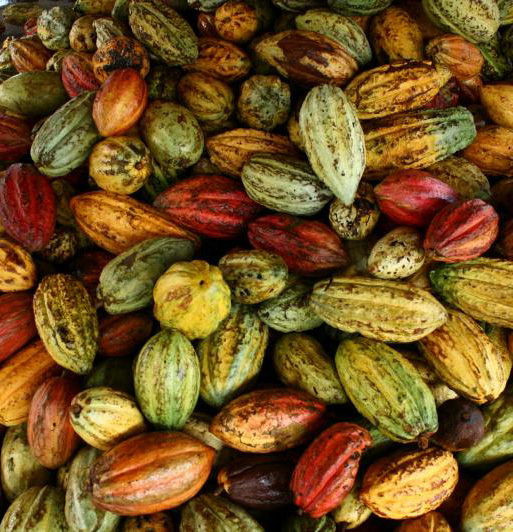
Cacao (Theobroma cacao L.) is one of the most important crops worldwide. However, there is other native species growth locally in the southern states of Tabasco and Chiapas in Mexico, the pataxte (T. bicolor Hump & Bonpl). Phenotypically cacao and pataxte are very similar and they share the same geographical origin but little is known about their genetic relationship. The objective of this research was to conduct an analysis of genetic diversity among native species of cacao and pataxte in south Mexico. We collected 46 accessions, which included four cacao genetic groups (Calabacillo, Guayaquil, Criollo rojo and Criollo blanco) and one pataxte. DNA purification was performed in order to amplify two microsatellite markers, MTcCIR11 and MTcCIR12 previously reported as informative in genetic diversity studies in cacao. For the diversity analyses we calculated the diversity indexes such as the number of alleles by population, effective number of alleles (ne), observed and expected heterozygosity, Hardy-Weinberg equilibrium and inbreeding coefficient. The allelic range observed in MTcCIR11 was 121-313 bp and in MTcCIR12 was 190-232 bp. For each marker we found five alleles with an effective number of alleles of Calabacillo=1.78, Guayaquil=2.63, Pataxte=2.69, Criollo Rojo=1.5 and Criollo Blanco=4. Observed heterozygosity was lower than the expected with exception of cacao groups Criollo blanco and Criollo rojo. In the AMOVA test we found a variance of 5% between populations and 67% among individuals from different populations. Our partial results point that the highest ne is found within the criollo species of cacao.
References
Aikpokpodion, P. O., Kolesnikova-Allen, M., Adetimirin, V. O., Guiltinan, M. J., Eskes, A. B., Motamayor, J. C., & Schnell, R. J. (2010). Population structure and molecular characterization of nigerian field genebank collections of cacao, Theobroma cacao L. Silvae Genetica, 59(1–6), 273–285. https://doi.org/10.1515/sg-2010-0039
Aikpokpodion, P. O., Motamayor, J. C., Adetimirin, V. O., Adu-Ampomah, Y., Ingelbrecht, I., Eskes, A. B., Schnell, R. J., & Kolesnikova-Allen, M. (2009). Genetic diversity assessment of sub-samples of cacao, Theobroma cacao L. collections in West Africa using simple sequence repeats marker. Tree Genetics & Genomes, 5(4), 699–711. https://doi.org/10.1007/s11295-009-0221-1
Aikpokpodion, P. O., Kolesnikova-Allen, M., Adetimirin, V. O., Guiltinan, M. J., Eskes, A. B., Motamayor, J. C., & Schnell, R. J. (2010). Population structure and molecular characterization of nigerian field genebank collections of cacao, Theobroma cacao L. Silvae Genetica, 59(1–6), 273–285. https://doi.org/10.1515/sg-2010-0039
Aikpokpodion, P. O., Motamayor, J. C., Adetimirin, V. O., Adu-Ampomah, Y., Ingelbrecht, I., Eskes, A. B., Schnell, R. J., & Kolesnikova-Allen, M. (2009). Genetic diversity assessment of sub-samples of cacao, Theobroma cacao L. collections in West Africa using simple sequence repeats marker. Tree Genetics & Genomes, 5(4), 699–711. https://doi.org/10.1007/s11295-009-0221-1
Arteaga-Voigt, D., Sandy-Valencia, x., Torres-Tola, E., Luna-Barrón, R., & Chávez-Carranza, E. (2016). Caracterización de la variabilidad genética de cacao nacional (Theobroma cacao L.) en la región del norte Paceño Boliviano. Wildlife Conservation Society, 14(1), 1–14.
Avalos, A., Porres, M. A., Poll, E., Dardón, E., Arévalo, L. A., & Rosales, J. A. (2012). Caracterización agronómica, botánica y molecular de clones de cacao tipo criollo y mejorado de la zona sur de Guatemala. Rev. Univ. Valle de Guatemala, 1(4), 100–104.
Azurdia, C. (2014). Cultivos nativos de Guatemala y bioseguridad del uso de organismos vivos modificados.
Batista, L. A., Ramos, L. P., Magalhaes, A. M., Amato, F., & Xavier, R. (2016). Molecular genetic diversity in a core of cocoa (Theobroma cacao L.) clones with potential for selection of disease resistance, plant height and fruit production. African Journal of Biotechnology, 15(44), 2517–2523. https://doi.org/10.5897/AJB2015.15188
Boza, E. J., Motamayor, J. C., Amores, F. M., Cedeño-Amador, S., Tondo, C. L., Livingstone, D. S., Schnell, R. J., & Gutiérrez, O. A. (2014). Genetic Characterization of the Cacao Cultivar CCN 51: Its Impact and Significance on Global Cacao Improvement and Production. Journal of the American Society for Horticultural Science, 139(2), 219–229. https://doi.org/10.21273/JASHS.139.2.219
Chumacero, C., Durka, W., Tscharntke, T., Hensen, I., & Kessler, M. (2013). Gene flow and genetic diversity in cultivated and wild cacao ( Theobroma cacao ) in Bolivia. American Journal of Botany, 100(11), 2271–2279. https://doi.org/10.3732/ajb.1300025
Coe, S. D., & Coe, M. D. (2018). La verdadera historia del chocolate (M. A. Pulido-Rull, Ed.; Primera edición, Vol. 1). Fondo de Cultura Económica.
Córdova-Avalos, V., Mena-De los Santos, G., Cruz- Palacios, V., Pérez-Flores, J., Chávez-García, E., Córdova-Avalos, A., Córdova-Aquino, J., & Izquierdo-Reyes, F. (2023). Benefits of homemade chocolate consumption on human health. Agro Productividad, 5(16), 147–154. https://doi.org/10.32854/agrop.v15i4.2497
Córdova-Lázaro, C. E., Jaramillo-Villanueva, J. L., Córdoba-Avalos, V., Carranza-Cerda, I., & Morales-Jiménez, J. (2018). Chocolate casero tradicional en la región de la Chontalpa Tabasco, México: actores y saberes locales. Estudios Sociales. Revista de Alimentación Contemporánea y Desarrollo Regional, 28(52), 1–27. https://doi.org/10.24836/es.v28i52.577
Cornejo, O. E., Yee, M. C., Dominguez, V., Andrews, M., Sockell, A., Strandberg, E., Livingstone, D., Stack, C., Romero, A., Umaharan, P., Royaert, S., Tawari, N. R., Ng, P., Gutierrez, O., Phillips, W., Mockaitis, K., Bustamante, C. D., & Motamayor, J. C. (2018). Population genomic analyses of the chocolate tree, Theobroma cacao L., provide insights into its domestication process. Communications Biology, 1(1), 167–178. https://doi.org/10.1038/s42003-018-0168-6
Cuatrecasas, J. (1964). Cacao and its allies, a taxonomic revision of the genus Theobroma. En Systematic Plant Studies (First edition, Vol. 1, pp. 379–614). Smithsonian Institution Press.
Dillinger, T. L., Barriga, P., Escárcega, S., Jimenez, M., Lowe, D. S., & Grivetti, L. E. (2000). Food of the Gods: Cure for humanity? A cultural history of the medicinal and ritual use of chocolate. The Journal of Nutrition, 130(8), 2057S-2072S. https://doi.org/10.1093/jn/130.8.2057S
Earl, D. A., & vonHoldt, B. M. (2012). STRUCTURE HARVESTER: a website and program for visualizing STRUCTURE output and implementing the Evanno method. Conservation Genetics Resources, 4(2), 359–361. https://doi.org/10.1007/s12686-011-9548-7
Evanno, G., Regnaut, S., & Goudet, J. (2005). Detecting the number of clusters of individuals using the software STRUCTURE: A simulation study. Molecular Ecology, 14(1), 2611–2620. https://doi.org/10.1111/j.1365-294X.2005.02553.x
Gálvez-Marroquín, L. A., Reyes-Reyes, A. L., Avendaño-Arrázate, C. H., Hernández-Gómez, E., Mendoza-López, A., & Díaz-Fuentes, V. H. (2016). Pataxte (Theobroma bicolor Humb. & Bonpl.): especie subutilizada en México. Agro Productividad, 9(1), 41–47.
Gómez-Rivera, A., Lobato, C. E., & López-Rodríguez, R. (2024). El Cacao tabasqueño: de los olmecas a nuestro tiempo (C. Zequeira Larios & G. Beauregard Solís, Eds.; 1a ed., Vol. 1). Universidad Juárez Autónoma de Tabasco. https://doi.org/10.19136/ect120424a0
Gopaulchan, D., Motilal, L. A., Kalloo, R. K., Mahabir, A., Moses, M., Joseph, F., & Umaharan, P. (2020). Genetic diversity and ancestry of cacao ( Theobroma cacao L.) in Dominica revealed by single nucleotide polymorphism markers. Genome, 63(12), 583–595. https://doi.org/10.1139/gen-2019-0214
Istvan L. Jr. and Istvan L. Sr. (2010). Gel Analizer 19.1.
Kim, J., Lee, K. W., & Lee, H. J. (2011). Cocoa (Theobroma cacao) seeds and phytochemicals in human health. Nuts and Seeds in Health and Disease Prevention, 351–360. https://doi.org/10.1016/B978-0-12-375688-6.10042-8
Lazar, I. Jr., Horvath-Lazar, E., & Lazar, I. Sr. (2010). GelAnalyzer 19.1 (19.1). www.gelanalyzer.com.
Lindo, A. A., Robinson, D. E., Tennant, P. F., Meinhardt, L. W., & Zhang, D. (2018). Molecular characterization of cacao (Theobroma cacao) germplasm from Jamaica using single nucleotide polymorphism (SNP) markers. Tropical Plant Biology, 11(3–4), 93–106. https://doi.org/10.1007/s12042-018-9203-5
Londoño-Murillo, J., Gil-Villa, D. M., Aguilar-Marín, S. B., Rivera-Páez, F. A., & López-Gartner, G. A. (2011). Caracterización molecular de clones de Theobroma cacao L., por medio de marcadores moleculares microsatélites. Revista Luna Azúl, 32(1), 32–50.
Loor Solorzano, R. G., Fouet, O., Lemainque, A., Pavek, S., Boccara, M., Argout, X., Amores, F., Courtois, B., Risterucci, A. M., & Lanaud, C. (2012). Insight into the Wild Origin, Migration and Domestication History of the Fine Flavour Nacional Theobroma cacao L. Variety from Ecuador. PLoS ONE, 7(11), e48438. https://doi.org/10.1371/journal.pone.0048438
Moreno, Y., Melgarejo, L. M., Hernández, M. S., Quintero, L., & Vargas, G. (2004). Caracterización molecular de un banco de germoplasma del género Theobroma mediante la técnica RAPD. Revista Colombiana de Biotecnología, 6(2), 15–24.
Motamayor, J. C., & Lanaud, C. (2002). Molecular analysis of the origin and domestication of Theobroma cacao L. En J. M. M. J.M.M. Engels, V. R. Rao, A. H. D. Brown, & M. T. Jackson (Eds.), Managing Plant Genetic Diversity (First, Vol. 1, pp. 77–87).
Motamayor, J. C., Risterucci, A. M., Heath, M., & Lanaud, C. (2003). Cacao domestication II: progenitor germplasm of the Trinitario cacao cultivar. Heredity, 91(3), 322–330. https://doi.org/10.1038/sj.hdy.6800298
Opoku, S. Y., Bhattacharjee, R., Kolesnikova-Allen, M., Motamayor, J. C., Schnell, R., Ingelbrecht, I., Enu-Kwesi, L., & Adu-Ampomah, Y. (2007). Genetic diversity in cocoa (Theobroma cacao L.) germplasm collection from Ghana. Journal of Crop Improvement, 20(1–2), 73–87. https://doi.org/10.1300/J411v20n01_04
Osorio-Guarín, J. A., Berdugo-Cely, J., Coronado, R. A., Zapata, Y. P., Quintero, C., Gallego-Sánchez, G., & Yockteng, R. (2017). Colombia a source of cacao genetic diversity as revealed by the population structure analysis of germplasm bank of Theobroma cacao L. Frontiers in Plant Science, 8, 1–13. https://doi.org/10.3389/fpls.2017.01994
Peakall, R., & Smouse, P. E. (2012). GenAlEx 6.5: genetic analysis in Excel. Population genetic software for teaching and research—an update. Bioinformatics, 28(19), 2537–2539. https://doi.org/10.1093/bioinformatics/bts460
Pérez-Obrador, C. A., Córdova Ávalos, V., Solana-Villanueva, N., Zaldívar-Cruz, J. M., & García-Alamilla, P. (2025). Bromatological characterization of three types of semi-industrial chocolates. Agro Productividad, 18(3), 211–216. https://doi.org/10.32854/fnz7h270
Pérez-Obrador, C. A., Solana-Villanueva, N., Córdova-Avalos, V., & Saldívar-Cruz, J. M. (2025). Preferencias de los consumidores de la Chontalpa tabasqueña de chocolate semiindustrial. Revista de Alimentación Contemporánea y Desarrollo Regional, 35(65), 1–25. https://doi.org/https://doi.org/10-24.836/es.v35i65.1577
Perrier, X., Flori, A., & Bonnot, F. (2003). Data analysis methods. En P. Hamon, M. Seguin, X. Perrier, & J. C. Glaszmann (Eds.), Genetic diversity of cultivated tropical plants (First, Vol. 1, pp. 43–76). Enfield, Science Publishers.
Rendón-Aguilar, B., González Soto, G., Oble-Delgadillo, M. I., Ojeda-Cornejo, V., Parra-Padilla, R. E., Pérez-González, E., & Ramírez-Hernández, L. (1998). Theobroma bicolor Humb. & Bonpl. (Sterculiaceae, “Cuapataxtle”) en el Municipio de Ayutla de los Libres, Guerrero. Composición Florística de los huertos y aspectos etnobotánicos. Botanical Sciences, 1(63), 75–84. https://doi.org/10.17129/botsci.1569
Ricaño-Rodríguez, J., Hipólito-Romero, E., Ramos-Prado, J. M., & Cocoletzi-Vásquez, E. (2019). Genotipado por secuenciación de variedades tradicionales de Theobroma cacao (Malvaceae) del Estado de Tabasco, México. Botanical Sciences, 97(3), 381–397. https://doi.org/10.17129/botsci.2258
Ruiz, J., Roa, O., & Marin, I. (2011). Molecular ecology of genetic diversity of cacao cultivated in the south-east region of Nicaragua. International Research Journal of Agricultural Science and Soil Science, 1(1), 6–13.
Ruíz-Erazo, X., Almanza-Pinzón, M., Morillo-Coronado, A. C., Morillo-Coronado, Y., González, A., Caicedo-Arana, A., & Muñoz-Flores, J. E. (2015). Comparación genética de tres fuentes de cacao Theobroma cacao L., mediante el uso de marcadores microsatélites. Biotecnología en el Sector Agropecuario y Agroindustrial, 13(1), 10–18.
Saunders, J. A., Mischke, S., Leamy, E. A., & Hemeida, A. A. (2004). Selection of international molecular standards for DNA fingerprinting of Theobroma cacao. Theoretical and Applied Genetics, 110(1), 41–47. https://doi.org/10.1007/s00122-004-1762-1
Sereno, M. L., Albuquerque, P. S. B., Vencovsky, R., & Figueira, A. (2006). Genetic diversity and natural population structure of cacao (Theobroma cacao L.) from the Brazilian Amazon evaluated by microsatellite markers. Conservation Genetics, 7(1), 13–24. https://doi.org/10.1007/s10592-005-7568-0
Smulders, M. J. M., Esselink, D., Amores, F., Ramos, G., Sukha, D. A., Butler, D. R., Vosman, B., & van Loo, E. N. (2010). Identification of cocoa (Theobroma cacao L.) varieties with different quality attributes and parentage analysis of their beans. Ingenics Newsletters, 1(12), 1–13.
Southgate, D. (2000). Chocolate and Cocoa: Health and Nutrition. European Journal of Clinical Nutrition, 54(4), 364–365. https://doi.org/10.1038/sj.ejcn.1600955
Tinajero-Carrizales, C., González-Pérez, A. L., Rodríguez-Castillejos, G. C., Castañón-Nájera, G., & Ruíz-Salazar, R. (2021). Comparación proximal en cacao (Theobroma cacao) y pataxte (T. bicolor) de tabasco y Chiapas, México. Polibotánica, 1(52), 135–149. https://doi.org/10.18387/polibotanica.52.10
Vázquez-Ovando, J. A., Molina-Freaner, F., Nuñez-Farfán, J., Ovando-Medina, I., & Salvador-Figueroa, M. (2014). Genetic identification of Theobroma cacao. Genetics and Molecular Research, 13(4), 10404–10414. https://doi.org/10.4238/2014.December.12.2
Velayutham, T., Rajamani, K., Senthil, N., Shoba, N., & Joel, A. J. (2013). Genetic diversity in cocoa (Theobroma cacao L.) plus trees in Tamil Nadu by simple sequence repeat (SSR) markers. African Journal of Biotechnology, 12(30), 4747–4753. https://doi.org/10.5897/AJB2013.12423
Zarrillo, S., Gaikwad, N., Lanaud, C., Powis, T., Viot, C., Lesur, I., Fouet, O., Argout, X., Guichoux, E., Salin, F., Solorzano, R. L., Bouchez, O., Vignes, H., Severts, P., Hurtado, J., Yepez, A., Grivetti, L., Blake, M., & Valdez, F. (2018). The use and domestication of Theobroma cacao during the mid-Holocene in the upper Amazon. Nature Ecology & Evolution, 2(12), 1879–1888. https://doi.org/10.1038/s41559-018-0697-x
Zequeira, C., & Beauregard, G. (2024). El cacao tabasqueño: de los Olmecas a nuestro tiempo (C. Zequeira & G. Beauregard, Eds.; Primera edición, Vol. 1). Universidad Juárez Autónoma de Tabasco.
Zhang, D., Arevalo-Gardini, E., Mishke, S., Zúñiga-Cernades, L., Barreto-Chavez, A., & Adriazola-Del Aguila, J. (2006). Genetic diversity and structure of managed and semi-natural populations of cocoa (Theobroma cacao) in the Huallaga and Ucayali valleys of Peru. Annals of Botany, 98(3), 647–655. https://doi.org/10.1093/aob/mcl146
Downloads
Published
Issue
Section
Categories
License
Copyright (c) 2026 POLIBOTANICA

This work is licensed under a Creative Commons Attribution-NonCommercial-ShareAlike 4.0 International License.

Polibotánica by Departamento de Botánica de la Escuela Nacional de Ciencias Biológicas del Instituto Politécnico Nacional se distribuye bajo una Licencia Creative Commons Atribución-NoComercial-CompartirIgual 4.0 Internacional.