Litsea glaucescens and Clinopodium macrostemum non-timber forest resources in traditional markets of the Central Valleys of Oaxaca
DOI:
https://doi.org/10.18387/polibotanica.60.23Keywords:
Importancia Cultural, Mercados tradicionales, Valor económico, Valor de usoAbstract
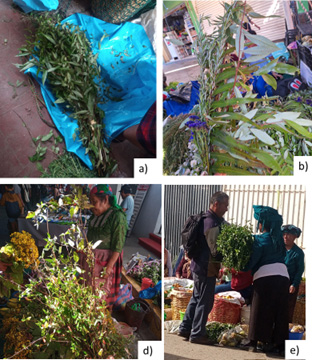
Traditional markets are places where a variety of products and knowledge are exchanged among the populations that frequent them. Therefore, the objective of this research was to identify the factors that determine the commercialization of Litsea glaucescens and Clinopodium macrostemum in the markets of Tlacolula de Matamoros, Villa de Zaachila, Ocotlán de Morelos, and the Central de Abastos (wholesale market) of the Central Valleys of Oaxaca. Semi-structured interviews were conducted using the interview-purchase technique with vendors of pennyroyal and laurel, from November 2022 to March 2024. Plants acquired with reproductive structures were preserved in the herbarium of the Technological Institute of the Valley of Oaxaca for identification. The use value index, cultural value, economic value, and relative importance of the species were estimated. Nineteen provenances were recorded, 78.68% of which were located in areas with a high degree of marginalization and at altitudes between 1782 and 3197 meters. In all four markets, pennyroyal has a higher cultural value, ranging from 2.5 to 3.46 on a scale of 0 to 4, compared to laurel, which ranges from 2 to 2.64. Furthermore, it has greater relative importance, with values of 0.88 to 1.0, compared to laurel's values of 0.46 to 0.75. The dynamics of marketing and availability of both species in the four markets are influenced by the knowledge and traditional use of them; sales are carried out on exclusive dates according to cultural-religious festivities.
References
Alvarado, A. M., García-Trejo, F., Cardador-Martínez, A., & Magallán-Hernández, F. (2020). Clinopodium mexicanum: potential and difficulties for the sustainable use of a Mexican medicinal plant [Clinopodium mexicanum: potencial y dificultades para el uso de una planta me. https://doi.org/10.37360/blacpma.20.19.2.8
Argueta Villamar, A. (2016). The ethno-bioecological study of the popular markets el estudio etnobioecológico de los tianguis y mercados en México. Revista Etnobiologia, 14, 38–46.
Asra, R., Ihsan, M., Andriani, F., Silalahi, M., Fijridiyanto, I. A., & Maryani, A. T. (2023). Diversity of medicinal plants sold in the traditional markets in Jambi, Indonesia. Biodiversitas, 24(3), 1544–1550. https://doi.org/10.13057/biodiv/d240326
Badger, C., & Macrory, R. (2022). Environment Act 2021. In Environment Act 2021. Hart Publishing. https://doi.org/10.5040/9781509951055
Calvo-Díaz, D. Y., Aguilar-Hernández, L., Jiménez-Noriega, M. S., & Torres-Montúfar, A. (2023). Ritual use of Rosa de Borracho (Clinopodium macrostemum (Moc. & Sessé ex Benth.) Kuntze, Lamiaceae) in Oaxaca, Mexico. Biodiversitas, 24(9), 5105–5112. https://doi.org/10.13057/biodiv/d240955
Castañeda Sifuentes, R., & Albán Castillo, J. (2016). Importancia cultural de la flora silvestre del distrito de Pamparomás, Ancash, Perú. Ecología Aplicada, 15(2), 151. https://doi.org/10.21704/rea.v15i2.755
Chishaleshale, M., Chirwa, P. W., Zekeng, J. C., & Syampungani, S. (2024). How do socio-economic characteristics of communities influence resource use and forest cover in the Cryptosepalum forest of North-western Zambia. Heliyon, 10(8). https://doi.org/10.1016/j.heliyon.2024.e28658
CONABIO. (2024, July 9). Comisión Nacional para el Conocimiento y Uso de la Biodiversidad. 2024. http://www.conabio.gob.mx/malezasdemexico/lamiaceae/clinopodium-mexicanum/fichas/ficha.htm
CONAPO. (2020, July 2). Índice y grado de marginación. INEGI. Consejo Nacional de Población. https://www.gob.mx/conapo/documentos/indices-de-marginacion-2020-284372
Davies, J., Blekking, J., Hannah, C., Zimmer, A., Joshi, N., Anderson, P., Chilenga, A., & Evans, T. (2022). Governance of traditional markets and rural-urban food systems in sub-Saharan Africa.
Dávila-Figueroa, C. A., Flores-Tena, F. J., Morales-Domínguez, F., Clark-Tapia, R., & Malphe-Balch, E. P. (2011, June 10). Estatus poblacional y niveles de aprovechamiento del laurel silvestre (Litsea glaucescens Kunth) en Aguascalientes. Revista Mexicana de Ciencias Forestales, 2(4):50–59. https://www.scielo.org.mx/pdf/remcf/v2n4/v2n4a5.pdf
Esquivel-García, R., Pérez-Calix, E., Ochoa-Zarzosa, A., & García-Pérez, M. E. (2018). Ethnomedicinal plants used for the treatment of dermatological affections on the Purépecha Plateau, Michoacán, Mexico. Acta Botanica Mexicana, 2018(125), 95–132. https://doi.org/10.21829/abm125.2018.1339
Estrada. (1985). Jardín Botánico de Plantas Medicinales Maximino Martínez.
Estrada-Castillón, E., Garza-López, M., Villarreal-Quintanilla, J. Á., Salinas-Rodríguez, M. M., Soto-Mata, B. E., González-Rodríguez, H., González-Uribe, D. U., Cantú-Silva, I., Carrillo-Parra, A., & Cantú-Ayala, C. (2014). Ethnobotany in Rayones, Nuevo León, México. Journal of Ethnobiology and Ethnomedicine, 10(1). https://doi.org/10.1186/1746-4269-10-62
Fierros, I., & Ávila-Foucat, V. S. (2017). Sustainable Livelihoods and Vulnerability in Rural Mexican Households. Revista Problemas Del Desarrollo, 191(48), 1–25. http://probdes.iiec.unam.mx
García-Reyes, E. M., Rojas-Olivos, A., Toral-Sánchez, E., & Cruz-García, G. (2023). Estudio etnobotánico y evaluación de la capacidad antioxidante de dos especies del género Clinopodium localizadas en el estado de Oaxaca, México. TIP Revista Especializada En Ciencias Químico-Biológicas, 26. https://doi.org/10.22201/fesz.23958723e.2023.577
Gómez García, E., Sol Sánchez, Á., García López, E., & Pérez Vázquez, A. (2016). Valor de uso de la flora del Ejido Sinaloa 1 a sección Use value of the flora from Ejido Sinaloa 1 st section, Cárdenas, Tabasco, Mexico. Revista Mexicana de Ciencias Agrícolas, 14, 2683–2694.
González-Gallegos, J. G., Figueroa, D. S., & Velázquez-Ríos, P. (2023). Clinopodium haraverianum (Lamiaceae: Menthinae), a new species from San Sebastián del Oeste, Jalisco, Mexico. Botanical Sciences, 101(2), 591–607. https://doi.org/10.17129/botsci.3214
Hernández-Flores S D, & G Vargas-Licona. (2020). Laurel (Litsea glaucescens) Endangered Species with High use Value. Publicación Semestral, 4, 25–29. https://repository.uaeh.edu.mx/revistas/index.php/prepa1/issue/archive
Hernández-Flores, S. D., & Vargas-Licona, G. (2023). The Food Plants Trade in The Kranggan Mas Traditional Market, West Java Province, Indonesia: Potential and Local Cuisine. Journal of Ethnic Foods, 10, 1–25. https://doi.org/t https:// doi. org/ 10. 1186/ s42779- 023- 00192-5.
Jiménez-López, D. A., Pérez-García, E. A., Martínez-Meléndez, N., & Solano, R. (2019). Wild orchids traded in a traditional market in Chiapas, Mexico. Botanical Sciences, 97(4), 691–700. https://doi.org/10.17129/botsci.2209
López-Romero, J. C., González-Ríos, H., Peña-Ramos, A., Velazquez, C., Navarro, M., Robles-Zepeda, R., Martínez-Benavidez, E., Higuera-Ciapara, I., Virués, C., Olivares, J. L., Domínguez, Z., & Hernández, J. (2018). Seasonal Effect on the Biological Activities of Litsea glaucescens Kunth Extracts. Evidence-Based Complementary and Alternative Medicine, 2018. https://doi.org/10.1155/2018/2738489
Mares-Guerrero Alejandro, & Ocampo Gilberto. (2020). Flora útil del área natural protegida sierra del laurel, Aguascalientes, México. Revista Etnobiología, 18(1665–2703), 3–23.
Martínez-López, G., E. Guízar Nolazco, A. Villanueva Morales, & M. I. Palacios-Rangel. (2021). Usos locales y tradición: estudio etnobotánico de plantas útiles en San Pablo Cuatro Venados (Valles Centrales, Oaxaca). Polibotanica, 51(2395–9525), 193–212. https://doi.org/DOI: 10.18387/polibotanica.52.13
Martínez-López, J., N.G. Molina-Luna, S. Rangel-Landa, C. Aquino-Vázquez, & A. Acosta-Ramos. (2022). Valor cultural de los recursos forestales no maderables en comunidades zapotecas de la Sierra Juárez de Oaxaca. Polibotanica, 53(2395–9525), 239–259. https://doi.org/DOI: 10.18387/polibotanica.53.16
Molina-Luna, N. G., Arellanes-Cancino, Y., & Martínez-Ojeda, E. (2015). El papel de la comercialización. orquídeas y bromelias de mercados de los valles centrales de Oaxaca, México, en la subsistencia campesina. Observatorio de La Economía Latinoamericana, 1–16.
Molina-Luna, N. G., & Cancino, Y. A. (2016). Intercambio de productos en mercados semanales de los Valles Centrales de Oaxaca, México. Revista Etnobiologia, 14, 92–99.
Moncayo, Y. W. P., & Diago, O. L. S. (2022). Plants and conservation practices of traditional medicine in the southeast of el Tambo, Cauca, Colombia. Botanical Sciences, 100(4), 935–959. https://doi.org/10.17129/botsci.3056
Munsell. (2012). Descripción_ Munsell plant tissue color book _ (2012 year revised).
Newing, A., Clarke, G., Taylor, M., González, S., Buckner, L., & Wilkinson, R. (2023). The role of traditional retail markets in addressing urban food deserts. International Review of Retail, Distribution and Consumer Research, 33(4), 347–370. https://doi.org/10.1080/09593969.2023.2198251
Ortega-Meza, D., Silva, M. T. P., de Arruda, J. C., da Silva, C. J., Sander, N. L., & Aiza, A. G. (2021). Local knowledge about the Mexican laurel (Litsea glaucescens Kunth) at El Chico National Park, Hidalgo, Mexico. Madera y Bosques, 27(2). https://doi.org/10.21829/myb.2021.2722167
Pérez-Ochoa, M., Luis Chávez-Servia, J., Minerva Vera-Guzmán, A., Nora Aquino-Bolaños, E., & Cruz Carrillo-Rodríguez, J. (2019). Medicinal Plants Used by Indigenous Communities of Oaxaca, Mexico, to Treat Gastrointestinal Disorders. In Pharmacognosy - Medicinal Plants. IntechOpen. https://doi.org/10.5772/intechopen.82182
Razo-Zarate, R., Retama-Cazares, L. B., Rodriguez-Laguna, R., Palacios-Romero, A., Meza-Rangel, J., Capulin-Grande, J., Fragoso-Lopez, P. I., & Jesus Cortes-Blobaum, H. (2019). Laurel (Litsea glaucescens Kunth) Regeneration in the Presence of Disturbance Events: A Case Study. Forest Science, 65(6), 688–692. https://doi.org/10.1093/forsci/fxz032
Rojas-Olivos, A., Solano-Gómez, R., Granados-Echegoyen, C., Santiago-Santiago, L. A., García-Dávila, J., Pérez-Pacheco, R., & Lagunez-Rivera, L. (2018). Larvicidal effect of Clinopodium macrostemum essential oil extracted by microwave-assisted hydrodistillation against Culex quinquefasciatus (Diptera: Culicidae). Revista Da Sociedade Brasileira de Medicina Tropical, 51(3), 291–296. https://doi.org/10.1590/0037-8682-0284-2017
SEMARNAT. (2010). Norma oficial MexicanaNOM_059_SEMARNAT_2010 Protección ambiental-Especies nativas de México de flora y fauna silvestres-Categorías de riesgo y especificaciones para su inclusión, exclusión o cambio-Lista de especies en riesgo. https://www.profepa.gob.mx/innovaportal/file/435/1/NOM_059_SEMARNAT_2010.pdf
Serralta-Batun, L. P., Jimenez-Osornio, J. J., Munguía-Rosas, M. Á., & Rodríguez-Robayo, K. J. (2023). Threats to the traditional agricultural landscape of southern Yucatan, Mexico: a perspective from the socioecological analysis. Revista de Economia e Sociologia Rural, 62(1). https://doi.org/10.1590/1806-9479.2022.265073
Silva-Castellanos, A. P., Magallán-Hernández, F., Vergara-Pineda, S., Ramírez-Segura, O., & Queijeiro-Bolaños, M. (2021). Propagation Protocol By Seed Of Clinopodium mexicanum, A Native Medicinal Plant From Mexico. Agrociencia, 55(5), 433–450. https://doi.org/10.47163/agrociencia.v55i5.2519
Solis López, M. K., Flores López, M. de L., & Valdés Padilla, G. (2023). Los mercados tradicionales en México. Cuyonomics. Investigaciones En Economía Regional, 7(12). https://doi.org/10.48162/rev.42.057
Tardío, J., & Pardo-De-Santayana, M. (2008). Cultural Importance Indices: A Comparative Analysis Based on the Useful Wild Plants of Southern Cantabria (Northern Spain) 1. https://doi.org/https://doi.org/10.1007/s12231-007-9004-5
Tepixtle-Colohua, V. V, M R Gonzalez-Tepale, D. Guerra-Ramirez, B. Reyes-Trejo, H. Zuleta-Prada, A.M. Borja-de la Rosa, & F. Reyes-Fuentes. (2023). Actividad antioxidante y citotóxica del aceite esencial de las hojas de laurel aromático (Litsea glaucescens kunth). Polibotanica, 55(2395–9525), 95–107. https://doi.org/DOI: 10.18387/polibotanica.55.7
Tinitana, F., Rios, M., Romero-Benavides, J. C., de la Cruz Rot, M., & Pardo-de-Santayana, M. (2016). Medicinal plants sold at traditional markets in southern Ecuador. Journal of Ethnobiology and Ethnomedicine, 12(1). https://doi.org/10.1186/s13002-016-0100-4
van der Werff, H., & Lorea, F. (1997). Flora del bajío 1997 fascículo 56 familia Lauraceae.
Downloads
Published
License
Copyright (c) 2026 POLIBOTANICA

This work is licensed under a Creative Commons Attribution-NonCommercial-ShareAlike 4.0 International License.

Polibotánica by Departamento de Botánica de la Escuela Nacional de Ciencias Biológicas del Instituto Politécnico Nacional se distribuye bajo una Licencia Creative Commons Atribución-NoComercial-CompartirIgual 4.0 Internacional.